
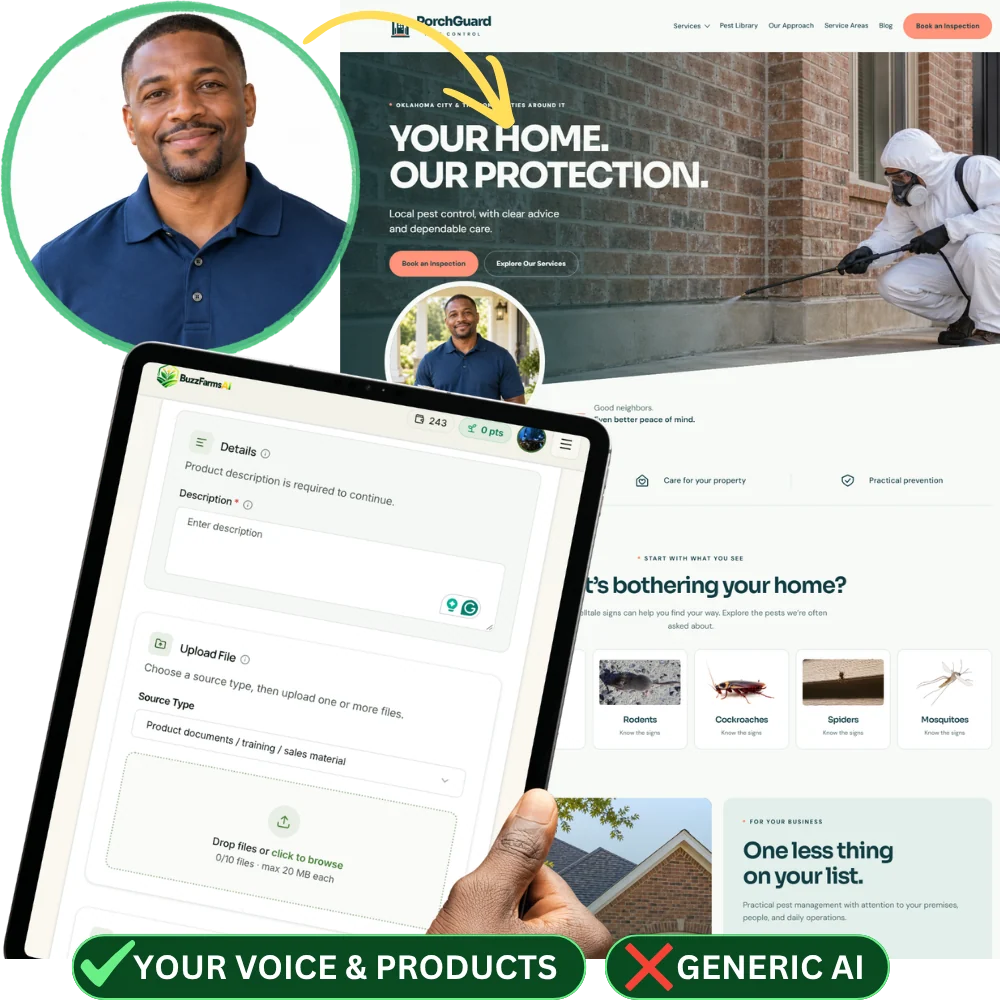
Choose a bounded first brief
Choose an offer or service you understand. Gather its current facts, approved images, relevant URLs and limitations. Decide which audience question the campaign will answer before choosing the page type. One coherent project is easier to review than several unrelated properties.
The documented workflow accepts URLs, files and product details. That is not permission to upload confidential client material or personal records. Supply only authorized information, remove unnecessary sensitive data and list the claims requiring a current source check.
Your first brief should be small enough that you can recognize an error. If you understand a business's services, use that knowledge to supply accurate descriptions and boundaries. If you are promoting a product, gather its current offer details and limitations. Avoid starting with an unfamiliar subject simply because it looks commercially attractive. The quality of your review depends partly on your ability to identify what a generated page has misunderstood.
Create a short source pack before generating. Keep the approved facts, authorized images, relevant destinations and unanswered questions together. Distinguish facts from ideas for wording. A desired benefit is not automatically a claim the product can substantiate. This preparation makes a later correction easier because you can point to the source that should govern the page rather than asking for a vague improvement.
If you are still deciding whether this workflow fits your work, start with the complete BuzzFarmsAI review.
Write the intended outcome
An illustrative brief could request a home-maintenance checklist for homeowners in an authorized client’s actual service area. Its next step might be requesting information, not purchasing. This planning example does not represent a customer, generated result or verified leads.
A brief works best when it names the audience, problem, evidence, output and boundaries. State what must not be invented: service coverage, prices, reviews, certifications or results. Define who reviews the work and what requires approval. These instructions make evaluation possible even when the generated draft appears fluent.
A stronger request explains what a successful reader experience looks like. For example: help a homeowner decide whether to request an inspection, explain what information the business needs, and avoid implying that every concern requires a paid service. That gives the draft a useful decision to support. It also prevents a generic sales page from replacing the practical information the reader expected.
Specify the tone through concrete instructions. Ask for familiar language, clear headings, short explanations of technical terms and direct answers to likely objections. Identify statements that need a source, such as guarantees or claims about service coverage. The purpose is not to make the prompt longer for its own sake. It is to give the Farmer a consistent set of constraints that can be checked across the page, guide and promotional material.
| Brief field | What to supply |
|---|---|
| Audience | Who needs the information and what decision they face |
| Offer | The actual product or service, with source-backed details |
| Output | A bounded page, guide or campaign deliverable |
| Visitor action | One clear, appropriate next step |
| Approval | Who checks content and authorizes external actions |
Choose around one clear marketing project
Match the connected Farm workflow to your audience, project scope and review capacity. The pricing guide explains the commercial details that still need confirmation.
View the BuzzFarmsAI offerMatch the workflow to the job
The Lite description centers on a hosted opt-in page, matching giveaway, promotional material and campaign flow. The Advanced description centers on a broader Farm property. Choose the scope because of the job, not because the larger option sounds more powerful. A quick campaign does not need every possible site format.
Confirm that the selected offer includes the mode and resources you intend to use. Before authorizing generation, understand the applicable allowances, connected-service costs and revision process. The documentation does not justify inventing a credit amount or a universal button sequence for all accounts and versions.
For a first Lite campaign, define the giveaway before judging the opt-in page. The promised resource and its introduction should address the same question. For a broader Advanced property, sketch the small set of pages the reader needs and how they connect. You do not need to pre-plan an enormous site. You need enough structure to explain why each proposed output belongs there.
Choose an initial stopping point as well. That might be a reviewed page, a tested enquiry route and one approved supporting resource. It is a project milestone, not a promised generation time. Once those elements work together, you can decide whether more content adds value. This approach makes the software easier to evaluate because you compare it with a defined deliverable rather than an open-ended expectation of automation.
Review the visitor journey
Read the page and any matching guide as a visitor would. Does the opening answer the promised question? Are product facts supported? Does the next step match the offer? Check that a giveaway is genuinely useful rather than an unrelated document attached to a form. Inspect mobile readability, image descriptions and link destinations.
Then review the proposed distribution separately. A draft suitable for your own site may be inappropriate for a community thread. Confirm the account, destination, permission and exact content before approving an action. Do not infer that finding an opportunity authorizes a post or that an automation label removes your editorial responsibility.
Use a separate pass for commercial accuracy. Check each price, renewal statement, package description and purchase destination. A persuasive paragraph is useful only if the visitor can rely on its material details. Confirm that any claimed bonus belongs to the chosen package. If an answer is missing, explain the uncertainty plainly instead of allowing a draft to fill it with a plausible-sounding assumption.
Then check the page on a phone. Important text should be readable without zooming, images should help explain the content, and the next action should be clear. Test the form using an appropriate internal procedure and confirm receipt with the intended owner. These checks are operational preparation. They do not establish conversion performance, but they prevent avoidable friction from obscuring whether the underlying message is useful.
- Remove invented claims, testimonials and unsupported urgency.
- Test the actual form, destination and promised next step before launch.
- Check privacy wording and permission to collect or pass on enquiries.
- Review recurring actions and decide when a person must intervene.
For a closer check of the capture stage, use the lead-magnet and opt-in guide.
Before connecting accounts or allowing external actions, review the approval checklist.
Decide what you will measure
Define a meaningful first review before expanding the campaign. You might examine whether visitors reach the useful guide, whether the form works and whether enquiries match the intended audience. These are examples of evaluation questions, not performance forecasts or results from our account.
Use Harvest signals alongside your own source records. Keep visitors, clicks, leads and any integration-reported transactions distinct. If the campaign attracts the wrong audience, investigate the message and source before generating more pages. A successful first project produces a clearer decision about the next task, not simply a larger pile of content.
Keep a short decision log after the first review. Record what you observed, what you think it means and the single change you will examine next. For example, several irrelevant enquiries might justify clarifying service coverage. They would not establish that publishing more articles is the right answer. Separating observation from interpretation helps you avoid asking the agents to optimize toward the wrong objective.
When you repeat the process, preserve the approved facts and remove outdated instructions. Retained context is useful only when it remains accurate. A product change, new service area or different follow-up owner should be reflected in the brief. The strongest reason to continue with a coordinated tool is that it helps maintain this continuity while reducing repetitive setup, not that it allows the project to run without anyone understanding it.
Finish with a useful first-project handover
A finished first project should leave you with more than generated files. Keep the approved source pack, final page destinations, publication permissions and the person responsible for enquiries in one place. Record which tasks can recur and which require another review. This makes the campaign easier to maintain and gives a future collaborator a clear starting point.
For client work, agree what delivery means before presenting the result. Does the client receive a finished site, ongoing content support or account access under a suitable license? Those arrangements have different obligations. Avoid promising a broad managed service when you have only scoped a page build. The commercial-rights guide explains why the advertised ability to sell websites should not be confused with every possible software-resale arrangement.
If the first project fits your working method, review the selected offer's capacity before expanding. Additional Farms or client accounts may justify a different package, but only when the allowance and rights match an actual need. This turns the tutorial into a buying test: can you produce, approve and support the kind of property you intended? That answer is more useful than counting how many outputs the system can generate.
Frequently asked questions
Is this a click-by-click account walkthrough?
No. It is a planning and review sequence grounded in the documented workflow. We do not invent interface labels or pretend the illustrative campaign was run in an account.
What should I prepare first?
One audience, a genuine offer, source-backed facts, authorized assets, the desired deliverable and clear approval rules.
Should I create several Farms immediately?
Begin with a project you can inspect and support. Expand only when you understand its quality, costs, permissions and actual audience signals.
How do I know the first project is ready to publish?
Check that the page answers its stated question, the factual claims match approved sources and the visitor can complete the intended next step. Inspect the supporting resource and any promotional draft for the same meaning. Confirm that the correct person receives enquiries or follow-up requests. A ready project should also have an owner for corrections after publication. This is a practical readiness standard, not a guarantee of traffic or sales. If an essential term or destination remains unresolved, keep that part pending rather than presenting it as complete. The goal is a small coherent visitor journey you can stand behind.
How should I request a revision?
Identify the problem, the governing source and the intended correction. For example, say that the page describes an annual charge as one time, supply the current terms and ask for the affected explanation to be corrected. That is clearer than requesting more persuasive copy. For a relevance problem, name the reader's unanswered question and explain what useful information is missing. Review the revised output in context because a corrected paragraph may still conflict with a nearby table or CTA. Keeping revisions specific helps the Farm retain useful instructions and makes it easier to judge whether the requested change was actually completed.
Put this workflow in context
Read the complete BuzzFarmsAI review for our recommendation, product scope and buying considerations.
Choose around one clear marketing project
Match the connected Farm workflow to your audience, project scope and review capacity. The pricing guide explains the commercial details that still need confirmation.
View the BuzzFarmsAI offerEvidence and editorial scope
We tried BuzzFarmsAI and liked using it. This is qualitative publisher feedback, not a measured performance benchmark. Features are attributed to the seller; suggested workflows are guidance, not invented test logs or customer results.
The official product preview was reviewed for this edition dated November 14, 2026. Mixed pricing and unrelated copy in that preview are not treated as verified purchase terms. Official images are promotional illustrations, used with the publisher's reported permission.