
Quick take: choose the audience problem before choosing the video generator. A small, relevant audience with a clear next step can be more useful commercially than unrelated entertainment views. Our provisional TokMax AI perspective remains 7.4/10 for its documented connected workflow; neither a niche nor software establishes future earnings.
The vendor currently advertises October 24, 2026 at 11 AM EDT, with a $37 Creator entry offer and 10,000 one-time credits. Those are advertised terms, not a live checkout confirmation. Disclosure: purchase links may earn us a commission at no extra cost to you.
Why Many Faceless Channels Have No Commercial Direction
“Faceless” describes who appears on screen, not what a viewer values. A compilation can attract curiosity without producing a relevant buying decision. Conversely, a short explanation of one specific software problem can help someone already comparing solutions. Neither outcome establishes a universal revenue-per-thousand-views rate: programme eligibility, geography, audience and offer economics all differ.
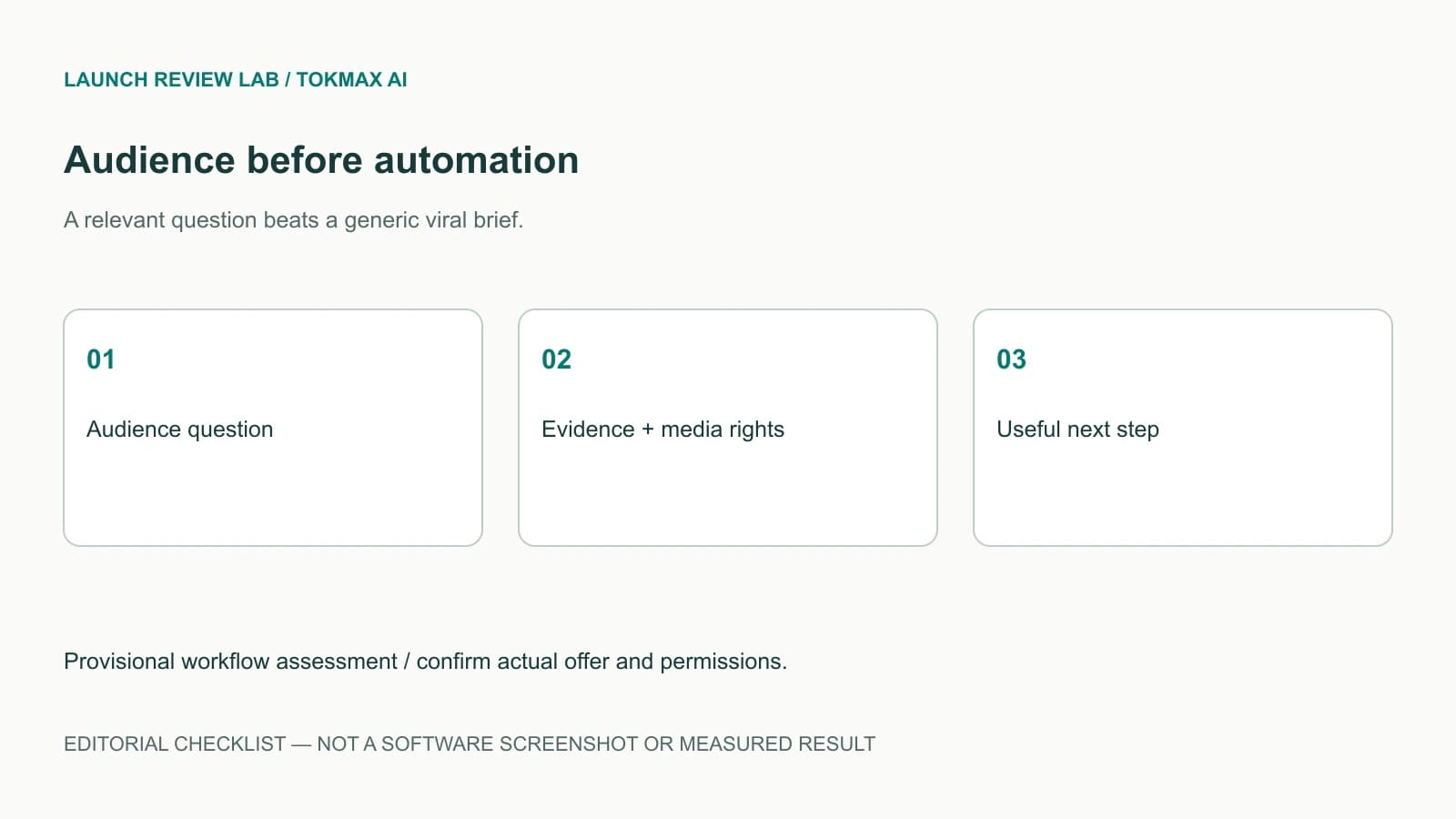
Begin with three questions: what recurring question can you answer accurately, what evidence can you show legally, and what useful action follows the video? If the answers are vague, generating more clips increases production volume without fixing positioning. Keep the product assessment in our full TokMax AI review separate from this editorial planning framework.
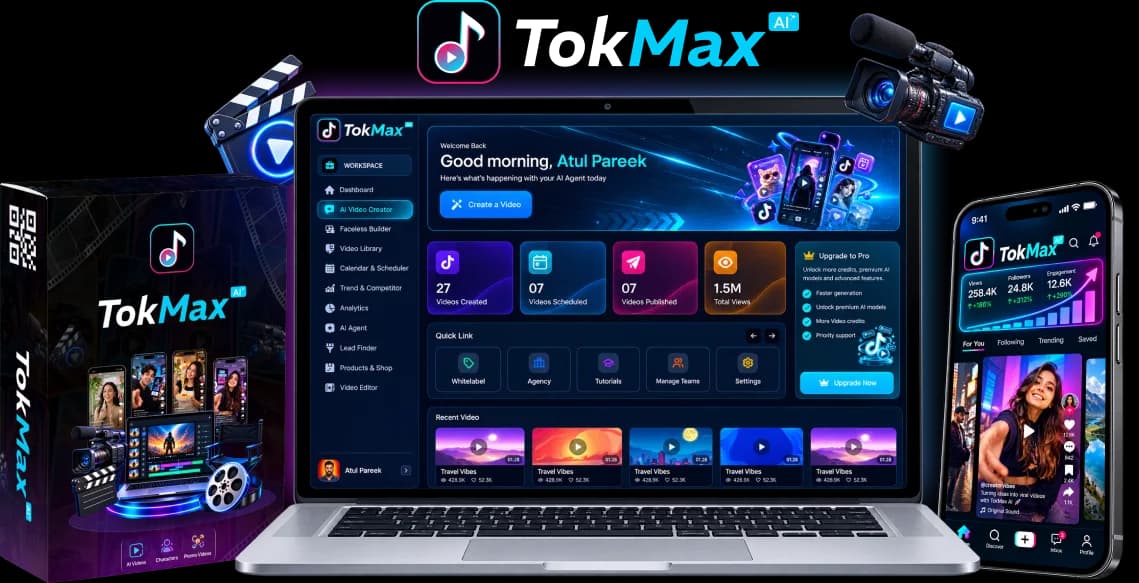
TokMax's documented script, hook and calendar tools may reduce handoffs after you have that brief. They do not replace subject expertise, sources or viewer research. Use a ten-idea backlog before spending credits; eliminate topics that depend on fabricated testimonials, someone else's footage or claims you cannot substantiate. Our honest review explains the difference between a connected workflow and a finished content business.
Seven Niches Worth Evaluating, Not Guaranteed Winners
1. AI Software and SaaS Micro-Reviews
Demonstrate one task, such as organizing a real spreadsheet or drafting a help response. Show the input, useful output and one limitation rather than reading a vendor's feature list. A strong hook is: “This export setting matters more than the AI button—here is why.” Use your own permitted screen recording and disclose a commercial relationship when recommending a product.
The commercial opportunity is relevance: a viewer struggling with that task may want a longer comparison or trial. The constraint is maintenance. Interfaces, prices and licences change; record the date, avoid pretending to have tested an unavailable tier and remove outdated claims. Affiliate eligibility and commission rates belong to the actual programme, not to the video generator.
2. Money Habits and Side-Project Operations
Prefer recordkeeping, budgeting concepts and the operational cost of a project to stock picks or promised returns. “Your side project has revenue—but what is left after these three costs?” creates a concrete educational question without implying that viewers will earn a particular amount. Use clearly fictional numbers and make the assumptions visible.
This category needs unusually careful factual review. Do not automate personalized investment, debt or tax recommendations, borrow a professional identity, or present revenue screenshots as your own results. A tool's script output is not financial expertise. If reliable review is beyond your competence, select a lower-risk niche instead.
3. Practical Productivity and Mindset
Turn an abstract principle into a small, observable habit: a shutdown checklist, a distraction log or one realistic planning method. “Before adding another productivity app, try this two-column list” gives the viewer something to evaluate. Original examples are more useful than repeating famous quotations over unrelated stock footage.
Commercial fit can include a genuinely useful workbook or newsletter, but avoid selling a transformation unsupported by evidence. Do not attribute generated quotations to historical people. Distinguish your interpretation of Stoicism from an authenticated quotation, and check source material before turning a philosopher's name into authority.
4. Fictional Mystery and Permission-Based Storytelling
An explicitly fictional mystery series offers repeatable structure without pretending that an invented crime happened. A hook such as “The receipt was dated tomorrow—here is what the detective checked first” is a creative premise, not a factual allegation. Build original scripts and use licensed visuals rather than copying posts simply because they are publicly readable.
Real true-crime coverage creates additional privacy, accuracy and harm concerns. Do not invent accusations, exploit victims, narrate graphic material for shock or assume a social post grants adaptation rights. This is an editorially demanding category, not the easiest automatic starting point. Story pacing also requires more human review than selecting a niche label.
5. Evidence-Led Health Literacy
Explain how to evaluate a claim rather than recommending supplements or diagnosing symptoms. “What does this label actually tell you—and what does it leave out?” can teach source checking without presenting a product as treatment. Obtain qualified review for health claims and cite appropriate original evidence where relevant.
Skip fabricated clinical results, synthetic doctor endorsements, dosage advice and guaranteed body changes. The fact that a supplement has an affiliate programme does not make it a suitable recommendation. Health content can carry higher review and compliance costs than a simple software demonstration; that cost belongs in the niche decision.
6. Travel and Property Context
Use permitted footage to explain layout, accessibility questions or travel planning trade-offs. “This beautiful listing photo cannot answer these three questions” makes a useful distinction between appearance and decision evidence. Identify illustrative footage and never let an AI-generated property stand in for a real available listing.
Licensing can be the bottleneck: professional property images, hotel photos, maps and music are not automatically reusable. Availability and prices also expire. A planning checklist or qualified referral may be a more honest next step than an invented luxury lifestyle claim. Keep local property and travel assertions current and relevant to the intended audience.
7. Gadgets That Solve One Visible Problem
Show a real constraint—cable clutter, awkward storage or an inefficient desk setup—and what the actual product does. “This solves one small problem, but check this dimension first” is more credible than calling everything a must-buy. Original demonstration footage is especially valuable when dimensions, fit or materials drive the purchase.
Do not imply you own a product because an AI clip shows it. Confirm merchant terms, permitted media, availability and the rules for any shopping feature you use. A TokMax commercial licence concerns its software/output conditions; it does not grant a manufacturer's image rights or automatic TikTok Shop creator eligibility.
Hook Templates and a Small Test You Can Interpret
Use the following writing briefs in the documented script/hook workflow. They are templates, not claims of a 70% three-second retention rate. Replace the wording with your own observed detail; do not replace missing evidence with confidence.
| Hook structure | Example brief | Evidence the clip must show |
|---|---|---|
| Problem before product | “Before buying another tool, check this export problem.” | A real, permitted example |
| Specific trade-off | “This saves a step, but adds this limitation.” | Both sides of the trade-off |
| Question with a payoff | “Why does this simple setting change the result?” | An explanation that answers it |
| Mistake and correction | “I would check these dimensions before ordering.” | Actual dimensions and context |
| Clearly fictional story | “The letter arrived with tomorrow's date.” | Original storytelling, labelled fiction |
Keep the topic and length similar while testing two different openings. Compare like-for-like viewing data after each post has had a reasonable observation window; small samples are noisy. Log the promise in the opening, the first visual and whether the ending delivered it. Editing to evade detection is not the objective. Making the viewer's question clearer is.
For the actual production sequence, read how TokMax AI works. For a policy-focused check before scheduling, use our AI-video and low-reach guide. Neither article establishes that a particular hook will outperform another on your account.
Credit Economics Differ by Production Complexity
Use total batch credits divided by approved videos as your working measure. Suppose, purely for planning, a software batch spends 1,200 credits and yields six accepted videos: that is 200 credits per accepted video. If a story batch spends the same amount but yields three accepted videos, the effective cost is 400. These examples are not TokMax tariffs or observed output counts.
Stock selection, regenerated scenes, voice changes, translation and retries may affect consumption; the actual action tariff and failed-job handling need confirmation. Do not divide 10,000 by an invented fixed price and advertise a guaranteed video count. The opening allocation is one-time, not a monthly refill. Our pricing and credits guide separates balances from upgrade labels.
Choose one niche for the first batch and reserve credits for revisions. Define acceptance before rendering: accurate script, usable sound, licensed media, readable captions and a relevant next step. A niche requiring professional review or original filming may still be worthwhile, but its labour cost is different from a simple templated explanation.
A Sensible First Channel Decision
Shortlist two niches you can cover responsibly, then write five distinct viewer questions for each. If you cannot supply reliable answers or suitable media, do not buy software to conceal that gap. Pick the niche where your evidence and audience understanding are strongest, not whichever list promises the highest RPM.
Revisit our main TokMax AI assessment before purchasing. Use the smallest suitable offer only if the documented workflow solves a real production problem. Read the monetization playbook for the next-step economics; conversion still requires a relevant offer, appropriate disclosures and an audience that chooses to act. No purchase, niche or upgrade guarantees traffic or income.
Sources checked October 17: vendor launch specifications and the public product document. This is an original planning guide, not a ranked earnings study or a measured account experiment.
Frequently Asked Questions
Which faceless TikTok niche pays the most?
There is no verified universal winner. Earnings depend on the audience, geography, eligibility, offer and accepted conversions; choose a topic you can cover accurately with a useful next step rather than an unsupported RPM ranking.
Do these hook templates guarantee 70% retention?
No. They are writing structures for controlled creative experiments, not measured results from TokMax AI or our accounts. Evaluate your own viewing data and whether the video delivers the promise in its opening.
Are the 10,000 Creator credits renewed each month?
The current vendor document describes a one-time allocation. Confirm action costs, expiry, retries and replenishment before estimating output; a niche requiring multiple generated scenes can have a different effective cost from a simple demonstration.
Can I copy Reddit stories or product footage into videos?
Public accessibility does not establish permission to adapt or commercially reuse material. Use original or appropriately licensed stories, footage and music, respect privacy, and verify the rules of any merchant or platform involved before publishing.