
Local businesses do not always need a new viral idea. They often need clear answers to the questions people ask before booking: what the service includes, who it suits, what to prepare and how to take the next step. ViralForge's advertised research-to-video workflow can be organized around that practical job.
This article is a campaign planning guide, not a case study claiming new bookings or revenue. The examples are hypothetical. For the product assessment and our qualitative experience, see our ViralForge AI review.
Disclosure: we may receive a payment when you buy through our links, at no extra cost to you. This is a commercial editorial publication, not the product creator or account service.
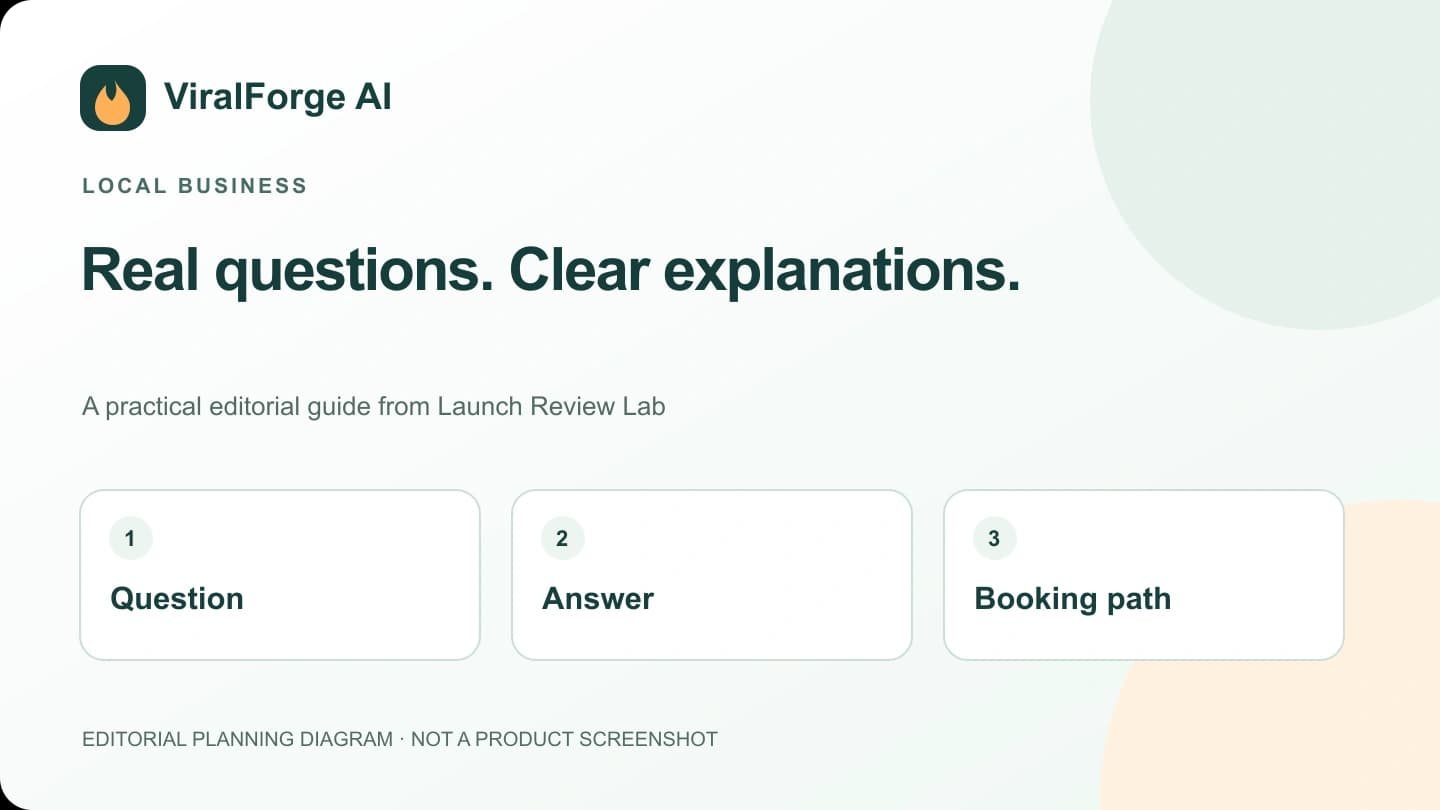
Begin with the business's own recurring questions
Ask the owner or service team which questions they answer most often. Choose a small group that can be explained accurately in a short video. A repair business might explain what information helps arrange a visit; a fitness studio might describe what to bring to a first class; a home-service provider might explain how an estimate works.
Use the business's actual service area, hours and process only after approval. Do not invent locations, availability or qualifications to make a generated script sound more complete. A polished video that sends someone to the wrong booking route creates work rather than removing it.
Keep sensitive customer information out of the brief unless its use has been properly authorized. A process demonstration or fictional example can explain a service without displaying a customer's address, account information or private circumstances.
Match the format to the question
A useful format can make an ordinary answer easier to follow. A checklist suits preparation advice. A sequence suits a booking process. A comparison suits choosing between service levels. A demonstration suits showing what a particular task involves.
| Business question | Suitable format | Approval focus |
|---|---|---|
| What should I prepare? | Short checklist | Accurate instructions and exclusions |
| What happens during a visit? | Step-by-step explanation | Real process and approved scope |
| Which service suits me? | Fit comparison | Fair distinctions and current inclusions |
| How do I request an estimate? | Action walkthrough | Correct destination and contact route |
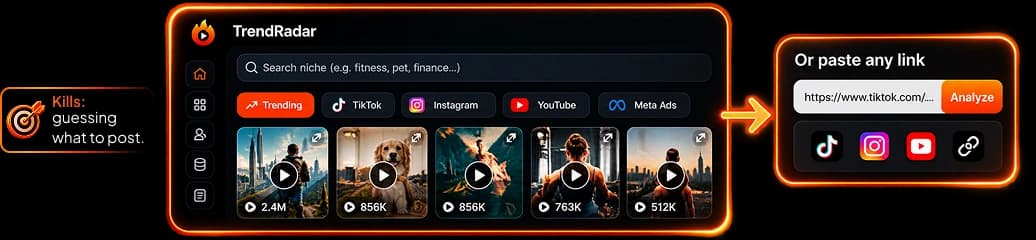
TrendRadar and ViralDNA are advertised as helping find and analyze formats. Use a reference for structure, not as permission to reproduce another local business's footage or claims. The client's own process should remain the source of the final message.
Build a small content package with clear boundaries
Define the deliverables before discussing a large batch. A practical pilot might cover three service questions, several approved creative variations and a limited publishing period. Specify who provides the facts and assets, who reviews the scripts and which account receives the content.
Avoid selling a guarantee of customers as though it were a software feature. A content service can promise its own deliverables—such as a defined number of reviewed assets and a reporting summary—without promising a result controlled by the audience, market or booking process.
Include revisions and exclusions in the scope. If an offer changes after approval or the client adds a new service, decide whether that is a correction or a new brief. This keeps the work manageable and makes the client relationship clearer.
Keep the booking journey consistent
Every video should lead to the appropriate next step. A preparation checklist might point to service information; a booking explanation should use the actual booking route. Confirm the mobile experience and make sure the page matches the business, location and service mentioned in the video.
Track calls, inquiries or bookings only through the business's approved reporting process. A social-platform view or click is not automatically a booked customer. Keep the definitions clear in the report so the owner can decide whether the campaign is bringing useful interest.
Our bio-link guide explains the measurement layers. It does not silently add tracking to a client's website or change their contact system; those actions need a separate agreed scope.
Verify the plan and permissions for client work
The official ViralForge material places expanded client-brand, channel and white-label capabilities in the Agency upgrade or packages that include it. Do not assume the Premium entry offer includes every agency function. Check the specific rights and account limits needed for the service you plan to sell.
Even an appropriate software licence does not replace client permission to use logos, premises footage, customer stories or presenter likenesses. Keep those permissions with the campaign record. Where a regulated service or sensitive claim is involved, obtain the business's qualified review before publication.
The official product specifications describe the advertised package distinctions. Confirm the selected order and applicable terms before promising a client a capability you have not established.
Deliver a report the business can actually use
Start the report with what was produced and published, then explain the available audience and inquiry signals. Include a short list of the questions that deserve more content. The owner should be able to see what changed and what decision comes next without decoding a page of unrelated metrics.
Retain approved scripts, final exports and publication links. If the client changes providers later, a clean handoff should not require reconstructing the entire campaign from screenshots. Our approval and handoff system provides a simple structure.
ViralForge's appeal here is helping organize production around real service knowledge. The business supplies the expertise and customer relationship; the creative workflow helps turn that knowledge into clearer, repeatable explanations.
Frequently Asked Questions
Does this article describe a real client result?
No. The campaign examples are hypothetical planning scenarios, not claims of bookings, revenue or measured client outcomes.
Can I assume the entry plan includes agency features?
No. The official material places expanded client and white-label functions in the relevant upgrade or package. Check the selected rights and limits.
What should a first local campaign cover?
Start with a few real pre-booking questions, accurate service information and a clearly defined destination. Keep the deliverables and approval process bounded.
Can the software guarantee new customers?
The workflow supports content production. Customer acquisition also depends on the offer, audience, service quality, destination and follow-up; report actual evidence rather than a promised outcome.