
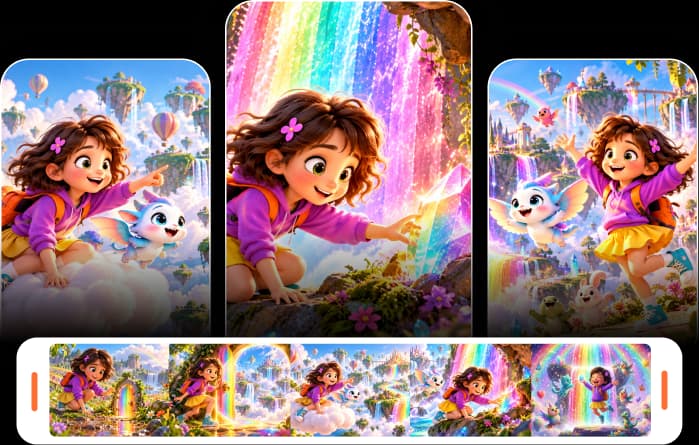
RocketToons character consistency matters because a cartoon is easier to follow when the audience recognizes the same hero in every scene. A familiar face, outfit and silhouette help connect separate shots into one story. The official product material explicitly focuses on reusable characters and continuity across settings and poses.
That is one of the reasons for our favorable RocketToons evaluation. This guide translates the feature into a production checklist. It does not report an independently measured consistency rate or promise that every generation will preserve every detail automatically.
We may earn a commission if you purchase through links on this page, at no extra cost to you.
Start with a compact character bible
Write a reference description for each important character. Include name, approximate age or role, silhouette, proportions, clothing and a distinguishing detail. A short description that stays stable is more useful than a long paragraph that changes with every shot. Use original characters or references you have permission to adapt.
Separate identity from temporary action. “Small orange robot with round blue eyes and a green scarf” describes identity; “carrying a seed tray through a greenhouse” describes the current shot. Keeping those layers distinct makes it easier to reuse the cast without rewriting who the character is whenever the story moves to another place.
Approve the cast together
A character can look attractive alone yet clash with the rest of the film. Review the cast in one visual group. Check apparent age, scale, rendering style and costume complexity. If one character looks photographic while another looks like a flat illustration, decide whether the contrast is intentional before production.
Create a simple comparison checklist: front-facing identity, profile identity, signature colors and proportions. The goal is recognition, not forcing every expression into the same pose. Save the approved references as a production source, not just an attractive image in a download folder. Our visual-style guide explains how style selection affects those judgments.

Lock locations and props as well as faces
Continuity involves more than the hero. A door should not move across the room without explanation, and a key object should not change shape between shots. The official specification describes continuity for characters, places and props; use that structure to plan a small environment library.
Keep an inventory of objects that affect the plot. A decorative background flower can vary without confusing the story, while a missing parcel or a changed uniform may create a real narrative error. Prioritize the elements the viewer must recognize. This distinction helps focus review effort instead of treating every harmless variation as an equally serious defect.
Build prompts around stable references
Use approved references consistently and change only the action, camera instruction and necessary scene detail. The official overview describes character tagging within prompts. Where your selected workflow supports it, use the actual saved asset rather than relying on a similar descriptive phrase to recreate it from scratch.
Keep an instruction focused. A character walking toward a doorway is easier to inspect than a shot containing several simultaneous costume, lighting and setting transformations. If the shot fails, you want to know what changed. A controlled prompt structure gives you a clearer revision path than adding an ever-longer list of contradictory instructions.
Review continuity across the edit
Compare adjacent shots at their transition, not just as isolated stills. Check the direction of movement, the object held in each hand and the character's emotional state. A smiling close-up immediately after a worried wide shot may be correct, but the change should have a reason the viewer can follow.
Use a three-pass check: identity first, action continuity second, visual polish third. Record the specific correction needed rather than writing “make it consistent.” Revisit an existing take when it already solves the problem. The editing guide covers take selection and final-file review, while the credits guide helps keep revisions intentional.
Keep a series recognizable over time
For recurring content, retain the cast references, style choices and approved locations between episodes. A short continuity sheet can note which props are permanent and which belong only to a particular story. Avoid casually replacing the hero's reference because a newer isolated portrait looks more attractive.
For client projects, have the customer approve identity before animation. Clarify whether later requests are an adjustment to the agreed design or a new character brief. RocketToons can support the production workflow, but the approval process remains your responsibility. A reusable cast is most valuable when it is connected to a clear creative agreement.
Frequently asked questions
Does character consistency mean every frame is guaranteed perfect?
No. The feature targets recurring identity, but generated results still require review. We have not measured a universal success rate.
Can I bring my own characters?
The official overview describes uploading your own characters. Use references you own or are authorized to adapt, and confirm the current workflow in your account.
Do props and locations matter too?
Yes. Objects and environments that carry story meaning should remain recognizable. Focus on the details the audience needs to connect the scenes.
Should I change styles halfway through a series?
Only as an intentional creative decision. A new style can change the cast's apparent identity, so approve a transition rather than assuming old references will look identical.
Product information and review scope
Product information checked October 24, 2026 against the official product specifications and supplied product material. Official descriptions inform the feature breakdown; they are not independent evidence of results. Where the sources disagree on package allowances, this guide preserves the uncertainty rather than choosing the most generous figure.
We tried RocketToons and liked using it. That qualitative experience is separate from package documentation and does not establish testing of every optional module, a paid-checkout verification, a measured outcome or a particular refund period. Use the official purchase route for current availability and the selected order's terms.